🔬 Micronutrient Coordination Chemistry & Ligand Stability
An exhaustive chemical dissertation on essential plant micronutrients: Zinc ($Zn$), Iron ($Fe$), Manganese ($Mn$), Copper ($Cu$), Boron ($B$), and Molybdenum ($Mo$). We derive coordination complex equilibria, calculate conditional stability constants for synthetic chelating ligands (EDTA, DTPA, EDDHA, IDHA), examine pH-dependent precipitation curves, and detail foliar vs. soil delivery kinetics.
In the grand symphony of plant nutrition, the essential Micronutrients—Zinc ($Zn$), Iron ($Fe$), Manganese ($Mn$), Copper ($Cu$), Boron ($B$), and Molybdenum ($Mo$)—are required in minuscule quantities compared to primary macronutrients. While a high-yielding cereal crop absorbs hundreds of kilograms of nitrogen and potassium per hectare, its total seasonal requirement for iron or zinc is measured in mere grams—often barely 200 to 800 grams of active metal per hectare!
Yet, under Justus von Liebig’s fundamental Law of the Minimum, plant growth is dictated not by total nutrient abundance, but by the single scarcest resource. A chronic deficiency of a few grams of bioavailable zinc or iron will halt chlorophyll synthesis, deactivate RNA polymerase enzymes, stall auxin production, and crash crop yields just as catastrophically as a total deficit of nitrogen or water!
Managing soil micronutrients presents an acute chemical challenge: most transition metals are exceptionally prone to rapid precipitation as insoluble oxides, hydroxides, and carbonates in aerated, neutral, or alkaline soils. To keep these vital metal cations dissolved and bioavailable in soil solutions, agricultural chemistry relies upon the powerful physics of Coordination Chemistry and Chelation. In this comprehensive advanced treatise, we explore metal ligand bonding, evaluate stability constants across the pH spectrum, analyze biological siderophores, and design precision remediation programs.
1. The Coordination Chemistry of Chelation: Ligands, Denticity, and Chelate Rings
The term Chelate originates from the ancient Greek word chele, meaning “a lobster’s claw.” In coordination chemistry, chelation describes the formation of two or more separate coordinate covalent bonds between a multi-dentate organic molecule (termed a Ligand) and a central transition metal cation (such as $Fe^{3+}$, $Fe^{2+}$, $Zn^{2+}$, $Mn^{2+}$, or $Cu^{2+}$).
Understanding chelate stability requires mastering three foundational chemical principles:
- Coordinate Covalent Bonding: In an ordinary covalent bond, each atom contributes one electron to the shared electron pair. In a coordinate covalent bond, the ligand molecule possesses non-bonding lone pairs of electrons (typically on electronegative nitrogen, oxygen, or sulfur atoms) which it donates entirely into the empty $d$-orbitals of the transition metal cation.
- Ligand Denticity: Ligands are classified by the number of donor atoms they possess:
- Monodentate: Water ($H_2O$) and ammonia ($NH_3$) donate a single lone pair.
- Bidentate: Ethylenediamine donates two pairs.
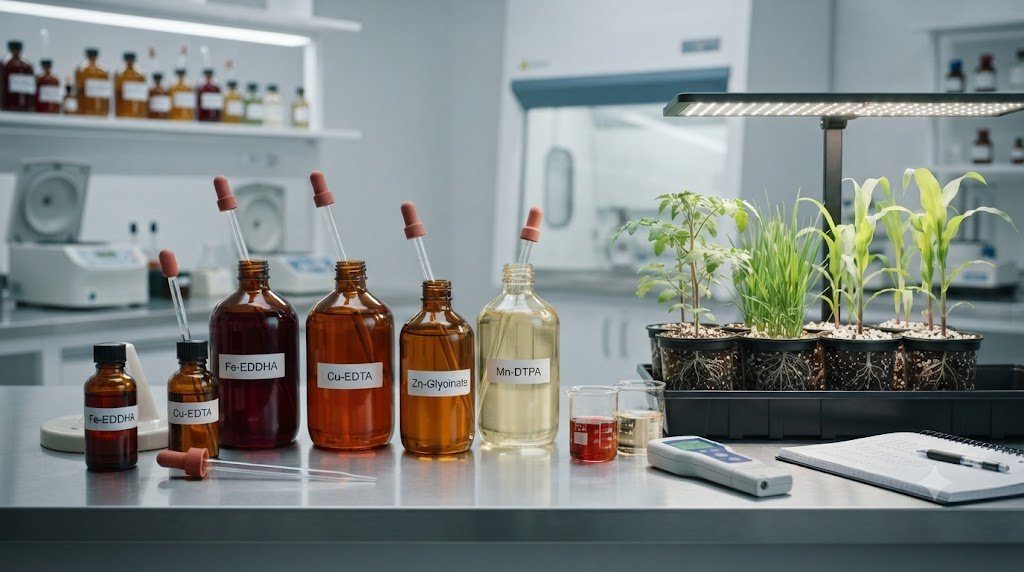
- Hexadentate (EDTA): Possesses two tertiary amine nitrogens and four carboxylate oxygens, providing six donor atoms that completely wrap around the central metal ion in an octahedral coordination sphere!
- The Thermodynamic Chelate Effect: Complexes formed by polydentate chelating ligands are orders of magnitude more thermodynamically stable than complexes formed by equivalent monodentate ligands. This stability is driven primarily by Entropic Favorability ($\Delta S > 0$): when a single hexadentate EDTA molecule coordinates with a hydrated metal ion $[M(H_2O)_6]^{2+}$, it displaces six individual water molecules into the free solution. Displacing six molecules by adding one molecule creates a massive surge in thermodynamic disorder (entropy), driving the reaction forward with immense stability!
2. Chelate Stability Constants and Conditional Formation Dynamics Across Soil pH
The affinity between a chelating ligand ($L^{n-}$) and a metal cation ($M^{m+}$) is quantified by its thermodynamic Stability Constant ($K_f$):
M^{m+} + L^{n-} \rightleftharpoons ML^{(m-n)} \quad \implies \quad K_f = \frac{[ML^{(m-n)}]}{[M^{m+}][L^{n-}]}
Because these values are immense, stability constants are expressed logarithmically as $\log K_f$. However, in real agricultural soils, a chelating ligand does not operate in pure water; it must navigate two fierce chemical competitors: Hydrogen Protons ($H^+$) competing for ligand binding sites at low pH, and Hydroxide Anions ($OH^-$) precipitating the metal as insoluble hydroxides at high pH. Furthermore, massive concentrations of soil calcium ($Ca^{2+}$) compete to displace the micronutrient from the ligand!
Therefore, agronomists evaluate the Effective Conditional Stability Constant across the soil pH curve:
| Chelating Agent | Chemical Name | log Kf (Fe3+) | log Kf (Zn2+) | Effective Soil pH Operational Range |
|---|---|---|---|---|
| EDTA | Ethylenediaminetetraacetic acid | 25.1 | 16.5 | pH 4.0 to 6.5 (Displaced by Ca2+ above pH 6.5) |
| DTPA | Diethylenetriaminepentaacetic acid | 28.6 | 18.3 | pH 4.0 to 7.5 (Effective in neutral and slightly alkaline soils) |
| EDDHA | Ethylenediamine-di(o-hydroxyphenylacetic acid) | 35.5 | 16.8 | pH 4.0 to 9.5+ (The ultimate iron chelate for calcareous soils) |
| HEDTA | Hydroxyethylethylenediaminetriacetic acid | 19.8 | 14.5 | pH 4.0 to 7.0 (Moderate stability; good foliar compatibility) |
| Citric Acid | Natural Carboxylic Acid | 11.4 | 4.5 | pH 3.5 to 6.0 (Readily biodegradable; short soil residence time) |
| IDHA | Iminodisuccinic acid | 15.2 | 12.1 | pH 4.0 to 7.0 (100% biodegradable synthetic chelate) |
3. The Iron Chlorosis Paradox: Calcareous Soils and the EDDHA Solution
Nowhere is chelation chemistry more critical than in the management of Iron Deficiency Chlorosis (IDC) in soybeans, fruit orchards, and grapes grown on calcareous soils ($pH > 7.5$).
Iron is the fourth most abundant element in the Earth’s crust, constituting over 5% of mineral topsoil mass. Yet, in calcareous soils containing free calcium carbonate, the soil solution iron concentration is practically non-existent. Under high pH and aerobic conditions, soluble ferrous iron ($Fe^{2+}$) rapidly oxidizes to ferric iron ($Fe^{3+}$), precipitating as amorphous iron hydroxide (ferrihydrite, $Fe(OH)_3$):
Fe^{3+} + 3 OH^- \rightleftharpoons Fe(OH)_3 \downarrow \quad (K_{sp} \approx 10^{-39})
At pH 8.0, the concentration of free $Fe^{3+}$ in solution drops to an astonishingly low $10^{-20}$ M—millions of times below the minimum concentration required for plant survival! When unchelated iron sulfate ($FeSO_4$) is applied to calcareous soils, it precipitates as insoluble ferric hydroxide within minutes of touching the soil.
Why Fe-EDTA Fails on Calcareous Soils: Although Fe-EDTA has a high nominal stability constant ($\log K = 25.1$), the soil solution in calcareous soils contains massive concentrations of dissolved calcium ($Ca^{2+}$). At pH > 6.8, calcium ions displace iron from the EDTA ligand, causing the displaced iron to precipitate as $Fe(OH)_3$ while the EDTA becomes saturated with useless calcium ($Ca ext{-EDTA}^{2-}$).
The Ortho-Ortho Fe-EDDHA Miracle: To remediate IDC, agronomists deploy Fe-EDDHA. The EDDHA ligand features phenolic hydroxyl groups that coordinate exceptionally strongly with $Fe^{3+}$, boasting a stability constant of $\log K = 35.5$. Even at pH 9.0 in the presence of massive calcium concentrations, the phenolic bonds refuse to release the iron. Crucially, growers must check the laboratory isomer analysis: only the ortho-ortho isomer provides long-term chemical persistence, whereas the cheaper ortho-para isomer breaks down in alkaline soil within 48 hours!
4. Natural Biological Chelation: Microbial and Plant Siderophores
Long before human chemists synthesized EDTA, soil organisms evolved nature’s most powerful chelating agents: Siderophores (from the Greek “iron carriers”). Siderophores are low-molecular-weight organic compounds synthesized by soil bacteria, fungi, and graminaceous plant roots to scavenge insoluble iron and transition metals.
Siderophores utilize specialized functional groups to coordinate metals with breathtaking stability:
- Hydroxamate and Catecholate Siderophores: Synthesized by soil bacteria (e.g., enterobactin from E. coli and bacillibactin from Bacillus). Enterobactin binds ferric iron with a mind-boggling stability constant of $\log K_f \approx 52$—the highest stability constant ever recorded in chemical science! These microbial siderophores strip iron from solid mineral surfaces, solubilizing it into the rhizosphere.
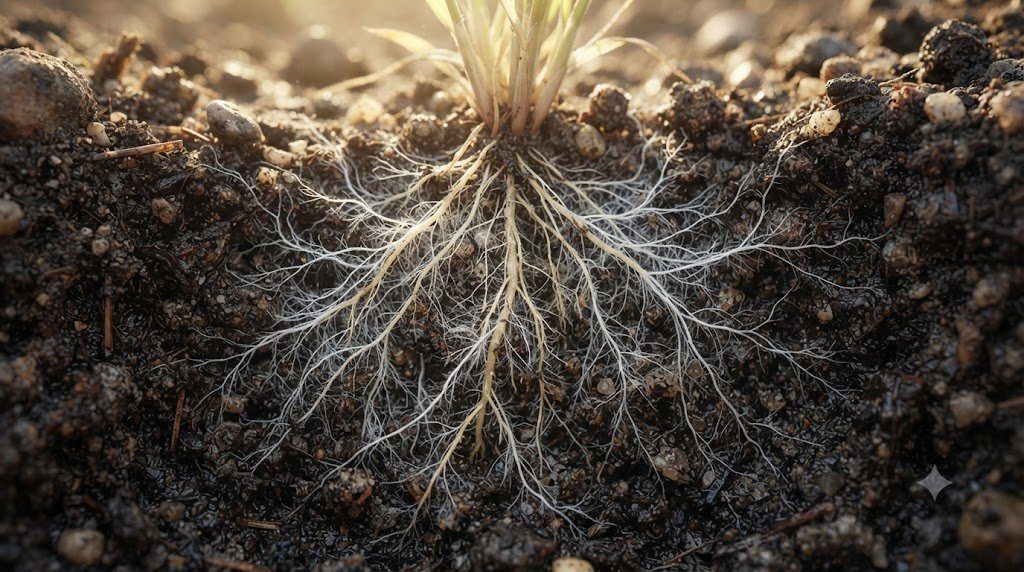
- Strategy II Graminaceous Phytosiderophores: Grass crops (maize, wheat, barley) utilize a unique “Strategy II” iron acquisition mechanism. Under iron stress, cereal roots synthesize and exude Phytosiderophores (Mugineic Acid Family) into the rhizosphere. The phytosiderophore dissolves insoluble mineral iron, forming a stable ferric-phytosiderophore chelate. The plant root then absorbs the entire intact chelate molecule via specialized plasma membrane transport proteins (YS1 / Yellow Stripe 1 transporters), bypassing the need to reduce iron at the root surface!
5. Soil pH and Micronutrient Bioavailability Dynamics
The bioavailability of all essential micronutrients is intimately governed by Soil pH. However, the directional response to pH creates a fundamental agronomic dichotomy between transition metals and oxyanions:
The Cationic Transition Metals (Zn, Fe, Mn, Cu): The availability of zinc, iron, manganese, and copper decreases by approximately 100-fold for every 1.0 unit increase in soil pH between pH 5.0 and 8.0! As pH rises, these metals undergo rapid precipitation as insoluble oxides and hydroxides while simultaneously binding tightly to deprotonated variable-charge sites on organic matter and clays. Deficiencies are widespread on neutral and alkaline soils ($pH > 7.2$).
The Anionic Micronutrients (Molybdenum and Boron):
- Molybdenum ($Mo$): Molybdenum exists in soil solution as the molybdate oxyanion ($MoO_4^{2-}$). Unlike zinc or iron, molybdenum availability increases as soil pH rises! In acidic soils ($pH < 5.5$), molybdate binds tightly to protonated iron and aluminum oxides. On acidic soils, molybdenum deficiency induces "whiptail" in brassicas and halts symbiotic nitrogen fixation in legumes (because molybdenum is the catalytic core of the microbial nitrogenase enzyme). Liming acidic soils to pH 6.5 immediately releases bound molybdate!
- Boron ($B$): Exists as uncharged boric acid ($B(OH)_3$) at pH < 8.5. Boron is highly mobile and prone to leaching in sandy acidic soils, but binds to calcium and becomes unavailable in high-pH calcareous soils ($pH > 8.0$).
6. Individual Micronutrient Agronomy: Physiological Roles and Deficiency Diagnostics
Recognizing the distinct physiological signatures of individual micronutrient deficiencies allows agronomists to diagnose problems before yield potential is irreversibly damaged:
- Zinc ($Zn^{2+}$): Essential cofactor for RNA polymerase and the precursor enzyme synthesizing tryptophan (the amino acid precursor of auxin / indole-3-acetic acid). Zinc deficiency manifests as “Little Leaf” and severe internode stunting (rosetting) in orchard trees, and broad white bands on either side of the midrib on young maize leaves (“White Bud”).
- Manganese ($Mn^{2+}$): Drives the water-splitting photolysis complex inside Photosystem II, generating the oxygen we breathe. Deficiency manifests as interveinal chlorosis on young to middle leaves, known as “Marsh Spot” in peas and “Speckled Yellows” in sugar beets. Over-abundance at low pH ($pH < 5.0$) causes toxic brown necrotic speckles.
- Copper ($Cu^{2+}$): Constituent of plastocyanin (photosynthetic electron transport chain) and polyphenol oxidases driving lignin synthesis. Copper deficiency causes weak structural stems, male pollen sterility, and “pigtailing” (twisted, bleached spiral tips on cereal flag leaves). Highly deficient on organic peat soils (Histosols) where humic acids bind copper with extreme covalent affinity.
- Boron ($B(OH)_3$): The only non-metal micronutrient; cross-links rhamnogalacturonan-II (RG-II) polysaccharides in primary cell walls and drives pollen tube elongation during pollination. Deficiency causes hollow heart in brassicas, poor grain set in sunflower and corn, and cracked, corky fruit skins in apples.
7. Foliar vs. Soil Micronutrient Application Kinetics and Adjuvant Science
When correcting micronutrient deficiencies, agronomists choose between Soil Application and Foliar Spray Application:
- Soil Application Dynamics: Applying unchelated inorganic salts (e.g., zinc sulfate, $ZnSO_4$, or manganese sulfate) to high-pH calcareous soils is notoriously inefficient, as up to 90% of the applied metal precipitates within weeks. However, banding chelated micronutrients (Zn-EDTA, Fe-EDDHA) in starter fertilizer bands places protected nutrients directly in the seedling root zone, providing season-long sustained uptake.
- Foliar Application Kinetics: Foliar feeding bypasses soil fixation entirely by delivering dissolved micronutrients directly onto active leaf surfaces. However, for a foliar nutrient to be absorbed, it must penetrate the hydrophobic, waxy Plant Cuticle composed of cutin, suberin, and epicuticular wax platelets.
- Adjuvant and Formulation Physics: Successful foliar applications require advanced tank-mix chemistry:
- Non-Ionic Surfactants and Organosilicones: Lower water droplet surface tension from 72 mN/m down to < 22 mN/m, transforming round beading droplets into ultra-flat liquid sheets that maximize leaf contact area.
- Deliquescence Point and Humectants: A foliar spray can only penetrate the cuticle while in liquid solution. Once the droplet dries to a solid crystalline salt, uptake drops to zero. Formulations include humectants (polyols) that lower the Point of Deliquescence (POD), pulling ambient humidity from the air to keep the spray droplet in a liquid, permeable state on the leaf for hours.
8. The High-Phosphorus / Zinc Antagonism in Crop Production
One of the most widespread induced micronutrient deficiencies in modern high-input agriculture is the Phosphorus-Induced Zinc Deficiency ($P-Zn$ Antagonism):
When growers apply massive broadcast rates of water-soluble phosphate fertilizers (MAP, DAP) to soils with marginal zinc concentrations, crops frequently exhibit acute zinc deficiency symptoms within 3 to 6 weeks of emergence. Agronomists historically believed this was caused by chemical precipitation of zinc phosphate ($Zn_3(PO_4)_2$) in the bulk soil. However, modern soil solution thermodynamic modeling proves that zinc phosphate is sufficiently soluble to supply adequate zinc.
The true mechanism is physiological and biological:
- Suppression of Arbuscular Mycorrhizal Fungi: High concentrations of available soil phosphorus signal plant roots to shut down carbon allocation to symbiotic mycorrhizal fungi. Because mycorrhizal hyphae are responsible for scavenging over 50% to 75% of a plant’s zinc from the soil matrix, shutting down the fungal network cuts off the primary zinc delivery pipeline!
- Inhibition of Root-to-Shoot Translocation: High internal concentrations of phosphorus inside root cells chemically bind zinc within root cortical cell walls, preventing the loading of zinc into the xylem for transport to vegetative leaves.
- Agronomic Rule of Thumb: When applying high rates of starter phosphate, agronomists always co-apply chelated zinc (Zn-EDTA) at a ratio of 10:1 to 5:1 (P to Zn) to protect against induced zinc starvation during early vegetative expansion.
9. Heavy Metal Phyto-Toxicity and Competitive Micronutrient Interactions
Because synthetic chelates and plant root metal transporters exhibit broad affinities across the transition metal series, agricultural soils contaminated with industrial heavy metals (Cadmium, Lead, Nickel, Arsenic) present severe agronomic and toxicological hazards. Heavy metals enter the food chain primarily by “piggybacking” onto the physiological transport systems evolved for essential micronutrients.
The foremost agricultural example is the Cadmium-Zinc ($Cd-Zn$) Interaction:
- Cadmium Toxicity Mechanics: Cadmium ($Cd^{2+}$) has an identical ionic radius and electronic configuration to essential zinc ($Zn^{2+}$). When cadmium is present in soils (originating from high-cadmium sedimentary rock phosphate fertilizers or industrial atmospheric deposition), plant root zinc transporter proteins (ZIP family) inadvertently absorb cadmium and translocate it into cereal grains and leafy greens, presenting acute nephrotoxic risks to human consumers.
- Agronomic Zinc Shielding: Precision agronomists suppress cadmium uptake through competitive mass action: maintaining high soil zinc saturation and applying supplemental zinc fertilizers competitively crowds root ZIP channels with harmless zinc ions, slashing cadmium accumulation in harvested grain by 40% to 70%!
- Nickel ($Ni$) and Urease: Nickel is the most recently recognized essential micronutrient, serving as the obligatory catalytic metal center of the plant urease enzyme. In soils with < 0.1 ppm bioavailable nickel, crops accumulating internal urea cannot metabolize it, resulting in severe necrotic leaf tip necrosis termed "mouse ear" in pecans and nursery stock.
10. Precision Micronutrient Soil Extraction and Spatial Prescription Mapping
Routine commercial soil testing laboratories quantify available micronutrients using specialized multi-element chemical chelating extractants—predominantly DTPA (Lindsay and Norvell method) or Mehlich-3 with ICP-OES spectroscopy.
The DTPA extraction is specifically buffered at pH 7.30 in the presence of 0.005 M DTPA, 0.01 M $CaCl_2$, and 0.1 M triethanolamine (TEA). The soluble calcium prevents the dissolution of solid calcium carbonate in calcareous soils, while the DTPA ligand complexes free metal cations, mimicking the dynamic desorption capacity of plant root exudates over a 2-hour extraction window.
Armed with georeferenced DTPA laboratory test data, precision agronomy consultancies generate Variable-Rate Micronutrient Application Maps:
- Textural and Organic Matter Layer Overlays: Combine soil electrical conductivity ($EC_a$) with satellite organic matter rasters. High organic matter swales often chelate copper too tightly, requiring targeted copper sulfate additions, while sandy ridges with low CEC require micro-doses of zinc and boron.
- Liquid Starter Impregnation: Micronutrients are rarely broadcast alone due to the mechanical impossibility of evenly spreading 1 to 2 kg/ha of dry powder across a hectare. Instead, fully chelated liquid micronutrient cocktails (Zn-EDTA, Fe-EDDHA, Boric Acid) are injected into liquid starter fertilizers (10-34-0 APP) and applied via high-precision planter in-furrow pumps. This guarantees every embryonic seedling emerges into a balanced micro-chemical zone, unlocking maximum genetic yield potential across every square meter of the field.